Sunday, December 15, 2024

Celebrate the Best of Us

Am I forever unredeemable?
Can I ever overcome all the wrongs I'm running from?
Can my worst be left behind
And do I deserve to find
There's a soul who could see any good in me?
Or will I only ever be
Unredeemable?

Unredeemable, from Spirited


Spirited is one of my favorite Christmas movies today. Only two years old, it stars Will Ferrell and Ryan Reynolds and is an over-the-top A Christmas Carol twist of a musical comedy. I love it. Our kids like it. My wife Amy does not. At least, not all the singing and dancing parts. Actually, none of the singing and dancing parts. 

She's not a musical fan, but she kind of likes the story. That one along with many other holiday movies we watch this time of year: predictable campy comedies and melodramatic classics and heartfelt uplifters. For us anyway. The Holiday, ElfChristmas Vacation, Just Friends, Four Christmases, Noelle, When Harry Met SallyThe Family Man (still my favorite), and It's a Wonderful Life (always a favorite). There are others as well, but these are the mainstays. And yes, Die Hard is a Christmas movie.

However, A Christmas Carol isn't one of my favorites, whether the Charles Dickens' novel or any of the movie adaptations over the years. I get the story. I like the story. Just not a favorite.

But the theme of it -- that even the worst human is redeemable and can be inspired to find the good inside others and inspire others to do the same -- has always resonated with me. 

Too bad the worst humans today get the most media visibility and inspire too many others to do their worst as well, including our children and grandchildren. Our own children ask us all the time now why so many people celebrate and support those who embrace the worst qualities of humanity. That's always a super-tough one to answer, and it gets harder to answer as our kids get older. 

Because we're all a little unredeemable, aren't we? That's what makes us human (and why we watch all those campy holiday movies each year). No matter what religious or spiritual belief system and/or societal norms we choose to live by, or try to live by, or pretend to live by, most of us have made poor choices and done bad things we're not proud of. 

Some of those have seen the light of day and hopefully we've repented, while others are secrets buried deep inside the dark wells of our hearts. Mercy me, that seems to be the plot of nearly every contemporary dark novel and movie adaptation in recent memory. 

Our kids want to know about our poor choices and bad things we're not proud of; they want to understand who we were, those choices we've made in our lives, and why we became who we are today as they're becoming who they are tomorrow. Of course, we don't tell them everything, but we do want them to understand the why of our choices and what those repercussions were, and what they could be today or tomorrow if they made them.

When they ask, we also talk openly about the worst of humanity with our kids now that they're older, while emphasizing the best of humanity when they don't. We know we shouldn't be defined by the worst things we've done, as long as we've worked hard to be good people and do good things for ourselves and others. 

Are we ever unconditionally selfless, empathetic, and loving with others throughout our lifetimes, no matter what they've done? For most of us, no. It's more complicated and nuanced for most humans, and the worst-of-us recidivism is unfortunately up these days. But instead of wallowing in all that, something I struggled with in my youth, I only need to look at my wife and children to know that we work hard to celebrate the best of us. It's not a Dickens' novel, or a spirited modern day musical (of which Amy is thankful), but it is a story of redemption I continue to write with gratitude. 

Sunday, December 8, 2024

Wiring the Right Way


I remember jumping off our roof into the swimming pool when my sister and I were in high school. Super fun and super dangerous, our dad would get so mad at us when he caught us.

According to psychologist David Yeager, something that looks like risky and crazy to us, may be a new way to solve a problem. Well, maybe not jumping off the house roof into the pool, but other things could apply, based on a podcast my wife Amy listened to: Dr. Maya Shankar -- A Slight Change of Plans: What We Get Wrong About The Teen Brain.

This was something Amy talked to me about on our mountain hike this morning. Yes, the teen brain doesn't finish developing and maturing until the mid-to-late 20's. The prefrontal cortex is one of the last parts to mature and it's the area that's responsible for skills like planning, prioritizing, and making good decisions. Something many adults struggle to believe at times that teens can do. That teens are "all gas, no brakes". Which is true, again at times, but again, they are capable of planning ahead. 

From the podcast above, the psychologist used the example of planning to sneak out of the house. Now, as we discussed this fact on our hike, we were not advocating it, but my Amy did sneak out when she was a teen. I, however, did not. Really, I didn't. My sister did, including taking my El Camino for a joy ride, but I never snuck out. Nope, I did not. Don't look at me like that. 

Here's a much less risky brain-powered example: How many competitive Olympic heroes are teens who train and develop their bodies and brains for the future? Quite a few actually. Of the 2024 Paris Olympic Great Britain and Northern Ireland team, 14 were teenagers out of 327. There were many others from around the world. 

Our teens are teens, yes, and they've had mental trials already, but they do continue to amaze us with their creative brain power (without sneaking out or jumping off the roof). Our oldest Beatrice constantly develops her artistic abilities and fine motor skills, and one of her recent projects was a meticulous model of a cute alleyway with a coffee shop and a bookshop. I helped with the wiring but she did all the rest. Bryce has also been back at the guitar working their brain overtime to learn some sweet tunes. 

Bryce also surprised us at the joint middle school and high school holiday choir performance when they joined 4 other classmates in singing and performing Fleet Foxes - White Winter Hymnal, which they practiced secretly for weeks. Their version was fantastic and tears definitely came streaming down this dad's face. Plus, there's the fact that both our teens can and do talk thoughtfully about current social issues, ethics, and how they are empathic allies for marginalized groups. 

Sure, they may forget to take out the trash when we ask, or close the freezer all the way after I reminder them, or feed the pets when they're supposed to, but their brains are wiring the right way, and for that we're grateful. 

Sunday, December 1, 2024

Loudly, Proudly, and with Much Love

On the way to my sister's house for Thanksgiving, our kids turned us on to some great new music. Artists we never would've heard otherwise -- beabadoobee, Alex G, Will Wood, The Volunteers, The Wallows, Glass Animals, and many others. Stuff that's not played on what's left of mainstream radio. Some of it sounding like shades of our music pasts from the 70's, 80's, and 90's. 

My wife Amy and I smiled in the front seat as we drove on and our kids excitedly took turns sharing their favorite artists, bands, and songs. Not all the music was our "cup of tea" as the expression goes, but much of it we really liked. It was also great insight into their teenage sensibilities.

Our kids have grown up hearing our music over and over again -- pop, rock, soul, rhythm and blues, and even some contemporary indie folk and country. Amy and I are also big fans of what's now called Yacht Rock -- smooth but surprisingly complex early "emo" (emotional) pop-rock from the 70's and 80's (think Steely Dan, Toto, Christopher Cross, Michael McDonald, Kenny Loggins, Ambrosia). We just finished watching a great documentary called Yacht Rock: A DOCKumentary from HBO Documentary Films that we highly recommend for those who love that music.

Early on in my life my mom turned me on to that music and more -- rhythm and blues, soul, pop, and of course my favorite, rock (and roll). Everything from Janis Joplin to the Ohio Players to Michael Jackson to Earth Wind & Fire to Pablo Cruise to The Doobie Brothers. 

Billy Joel's hit "Only the Good Die Young" was the first 45 record I bought with my allowance. My sister and I walked to the local mall and went to the Woolworth's record section where we would check out all the records for what seemed like hours. Every time we had enough money to buy a new single, we made the trek to Woolworth's. 

A few years later when I was 13, I joined the Columbia Record Club and bought 13 records for 1 cent, which really turned out to be more in shipping and handling. But my parents weren't happy when they found out I still had to buy three more albums over two years at full overpriced Columbia Record Club prices. However, those first 13 albums were my coming of age -- Kiss, Kansas, Journey, Boston, Queen, Aerosmith, AC/DC, and others (becoming the Rush fan I am today would come a few years later). 

Between then and now there's been so much amazing music I've experienced, and I must credit my nephew Nick for turning me onto to some of it during the 2010's. His mother (my sister) and father were also grounded in
tons of great music and both my nephew and niece love it all, too. Again, thank you, Nana (Mom). 

One of many shared loves of Amy and I that's fueled our love for nearly three decades is this very music we grew up with, our coming-of-age music, and the music we've grown together with ever since we met. Our kids don't necessarily like all these past musical artists and bands as much as we do, but our music has influenced them more than they've realized, just like my mom's music influenced my sister and me. 

Our kids grew up loving pop music (Taylor Swift and many others), but today along with pop, Beatrice also loves alt-rock from the 90's to today (thank you grunge), and Bryce loves edgy new punkish-rock and amazing new singer-songwriter music. Now the coming-of-age circle is complete because they're turning us on to a lot of great new music. 

But the greatest tribute for me, even though they don't listen to the band (yet -- ha!), is the fact that my daughters wear my Rush t-shirts and sweatshirts. That most certainly rocks, because what they don't know is that to me (and millions of fans), Rush has always represented individualism, critical thinking, learning, levity, and empathy -- all the things and more we want for them -- loudly, proudly, and with much love.

Friday, November 29, 2024

What’s Left


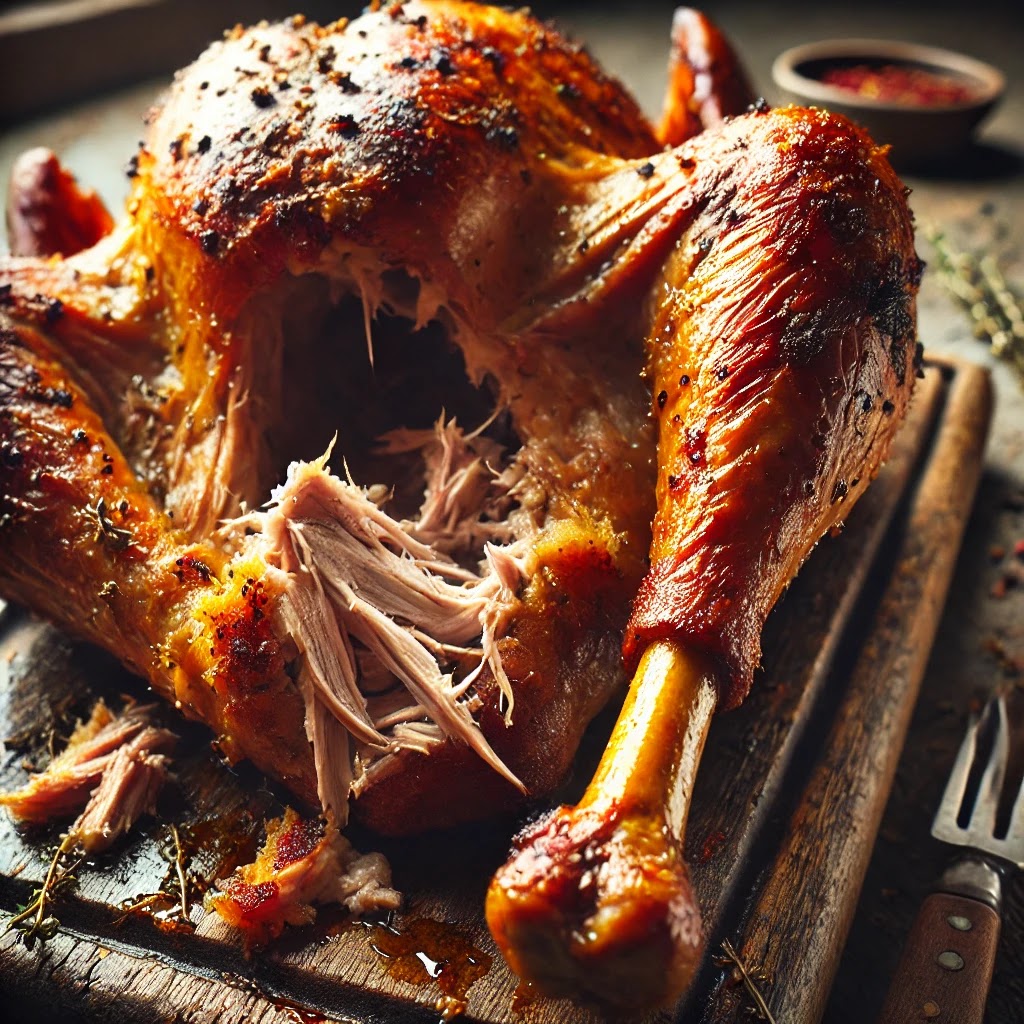
What’s left is a turkey leg
Attached to its bony carcass
On a dirty dish-piled counter 
Wondering whether it ends up
In soup stock or the trash can
It overhears laughter 
Some frothy debate 
A fight breaking out
New people broken in
Children running
Children crying 
Drunken singing
Zingers flying
Kisses stolen
Bodies swollen
Someone smokes outside
Games are played inside
And the turkey leg longs
To be a part of the throng
But it knows it won’t be
As its time is numbered
Maybe lasting till morning 
While largely ignored until 
The deep sighs of woeful
Cleaning have begun
But that’s hours away
And it really wants to stay
While the humans beyond 
Are purposefully loud 
Loving and painfully aware
Of limitations and aspirations
Until they all drift slowly away 
What’s left is a turkey leg
Grateful for the memories 
They forever become

–KWG

Sunday, November 24, 2024

Our Children Are Counting On Us

"Half the world hates
What half the world does every day
Half the world waits
While half gets on with it anyway..."

Rush, Half the World 

The hopeful yet trite saying that most people are good must still be somewhat true, otherwise half of us would always be hating the other half. 

[Pause] 

Maybe that's not fair, to think that half of America, or half the world, hates the other half. That's an over-simplified view of the human experience, even in the realities of today. However, the history of humankind has shown us again and again how easily others are marginalized and trampled underfoot, usually by those in power and the way the wind blows. Plus, our biological human history has been a continuous struggle between the want of experiencing immediate and irrational gratification and self-preservation, and the painful emotional dissonance of rational evolution. 

In other words, we're mostly feeling beings who sometimes think, no matter the amazing human accomplishments throughout history. I certainly raise my hand in full admittance here. 

As a species, we have evolved rationally, ethically, and spiritually, and every generation tests this progress by demanding evidence and pointing out how fallible we are. My wife Amy and I are experiencing that right now with both our teen daughters. Two questioning kids on their own paths to independence and their own identities who grapple with the human-condition realities of today. 

Our oldest Beatrice currently has an honors World History course that we help quiz her on and we always get the tough ethical questions of why. They're studying World War II now, the Holocaust, and development of the atomic bombs the U.S. dropped on Japan to attempt to end the war. Why were over six million Jewish people exterminated? Why did we kill over 200,000 people with the atomic bombs?

And the list of questions goes on and on. Just like I remember doing when I was a teenager. All the hard questions, all the time, and never feeling satisfied with the answers I received. "Most people are good, and sometimes we do bad things, and God forgives us all." 

In my lifetime since, I've always wanted to believe that we've evolved ethically and spiritually, but over time, especially today, I don't think I've ever seen so many poor male and female role models in government leadership, business leadership, and everyday personal leadership who fully embrace, justify, and normalize misogyny, harassment, sexual assault, racism, xenophobia, homophobia, corruption, grift, hate, and violence. 

And I go back many decades now. These detrimental ideals are embraced, then denied, and then forgiven. But they never go away. The fragmented and biased media coverage hasn't helped. The constant misinformation hasn't helped (artificial intelligence and automation has fueled this, too). Finding God hasn't helped either and has perpetuated more hate than love. And the questions from our children pile up. 

Author James Baldwin wrote, "I imagine one of the reasons people cling to their hates so stubbornly is because they sense, once hate is gone, they will be forced to deal with pain." That's why I recommend more study of inclusive empathy, understanding, and love, to be empathic allies, but that would mean folks would have to deal with their pain, the pain of why we hate and what we have to give up and give in to do that, and again, human biology fights that tooth and nail. 

Amy and I agree we've been judgmental about others and about current events we've discussed in front of our children, about how we see the world and the poor role models around us (and the good ones too), but it's never done out of malice. Anger and frustration sometimes, but never malice. This is why we've worked on as adults and parents is finding joy in the success of others, of those overcoming obstacles and improving their lives and mental health, and more, and how we can help or support their success. In other words, what it's like to have empathy and understanding where others are at, and why they are where they're at. Something our teens remind us of every single day with their adult commentaries. 

Blessings to all those poor role models out there in the world today. I hope some of them can turn it around, for the sake of all our children and grandchildren, and especially for the sake of their own children and grandchildren. 

Because think about what all the children and grandchildren see and hear and what it does to them, how it taints their perception of others and the world. We can choose to love and understand, or we can choose to hate and minimize. Of course it's not a simple dichotomy; human experience is definitely more complex than we acknowledge and the gradations of good and bad are gray at best sometimes. Again, we're mostly feeling beings who sometimes think, so let's "get on with it anyway" and think more about how we're feeling, why we're feeling, and what to do about it that's inclusive for everyone. 

Amy and I believe we can be better, and we can do better. All our children and grandchildren are counting on us. 

Saturday, November 9, 2024

To Be Empathic Allies

“Truly amazing, what people can get used to, as long as there are a few compensations.”

―Margaret Atwood, The Handmaid’s Tale


“We must accept finite disappointment but never lose infinite hope." 

Martin Luther King, Jr


My wife Amy and I have always loved "end of the world" stories. When we first met, we discovered we had both read Lucifer's Hammer, a 1977 novel about a comet breaking apart and striking earth and the survival story afterwards, and still talk about it to this day. Then there was The Stand by Stephen King and The Road by Cormac McCarthy, and television shows like The Walking Dead (based on graphic novels), Station Eleven (based on a novel), The Last of Us (based on a video game), and The Handmaid's Tale (based on Margaret Atwood's novel, and now a little too close to home). Plus, many more novels, movies, and TV shows in between. 

Ultimately for us both it was less about the why of the end, no matter how horrible the aftermath, and more about the how of human perseverance and survival laced with empathy and love. As long as there was a thread of hope and love in the story with empathic protagonists, then it reaffirmed our own hopefulness and love for humankind. Of course, that was just as true for us in everyday nonfiction stories, too. 

Including reelecting a convicted authoritarian president (and a congress majority) who only leads with misogyny, racism, anger, and fear, reaffirmed again and again by constant misinformation and lies for the past decade. Over half the U.S. who supported him may disagree with that, and/or overlook it, and/or not care.

The world may or may not end with a cataclysmic bang because of this; maybe it'll only end in a whimper and we'll survive this real-life dystopian future that's coming. In the meantime, it's still soul-crushing to believe that so many of us are driven by that much grievance, anger, and fear. Because ultimately it was never about the price of eggs. That was simply an unfortunate by-product of supply-and-demand economics that most of us don't even understand or care to. 

We're all fallible, feeling beings who sometimes think, not the other way around. It's always been easier to have scapegoats, others to blame for our misgivings and misfortunes, but history has shown again and again how this all ends. That's what worries me the most. Not the end of America or World War III, but the more immediate danger of a newly empowered harassment and violence escalation against women, the LGBTQ+ community, people of color, immigrants, neurodivergent people, people of different religions, and empathic allies like my wife, our children, and me (and many of you). The targets on our backs have never been bigger. And it's not just coming -- it's already here. 

Thankfully a dear friend reminded me that we do need to continue to fight the good fight on the ground in the communities where we live. To be empathic allies who lead with love, hope, and understanding and help ensure basic human rights and safety equity for all. And that's exactly what we're going to do. Blessings to us all. 

Saturday, November 2, 2024

Listening with Empathy and Love

40 years ago I was a mental mess. I had finished high school and graduated, but had trashed my stellar GPA the last semester. I remember barely keeping it together as I pushed my best friend into the stadium for our graduation ceremony. He had broken his neck our senior year; I had broken my spirit. It was still a special moment, but a painfully bittersweet one.

Thankfully I was only just beginning to talk about how I felt, even if I didn't fully understand what was going on with my mental health. I was over a decade away from the grateful and mindful path I'm still on today, but at least it was a start. Childhood trauma combine continuous self-imposed pressure to succeed in school led to crippling social anxiety and panic attacks for me my last year and a half of high school. Once I could finally talk about it with friends, my family, a caring high school counselor -- it helped, but the damage at the time had been done. Suicidal thoughts crept their way in at times, but I knew in my heart life would be different someday. 

And it is. Us Gen X kids may have been tougher and survivors growing up (at least it makes a great social media meme), but some of us had our share of mental and emotional train wrecks along the way. Now, with Gen Z teens, my wife Amy and I have been riding the parental roller coaster, again, of teen anxiety. Anyone with teens today knows what I'm taking about. 

Depression, anxiety and behavioural disorders are among the leading causes of illness and disability among adolescentsUgh.

Teen anxiety may be a common crappy rite of passage, but one difference for our kids than for me at that age was earlier self-awareness, more accessible empathy (from within and from others), and the ability to articulate how they feel. Listening to your kids without judgement, and/or without trying to always solve their problems or telling them to toughen up and deal with whatever it is they're dealing with, is super critical. Encouraging hobbies, sports, theater, music, and physical activities can help, too. 

Sure, I grew up riding in the back of pickup trucks with nothing strapping me in (literally and figuratively). I also literally fell out of the back of one of those trucks when I was 16. Good times. 

Our kids will go through what they go through, have their own bittersweet journeys just like we did. But there should never be any stigma in listening with empathy and love and giving them the resources and support they need to learn how to adapt and thrive in life. And parents need a lot of that empathy and love, too.